247concept provides latest news from Nigeria and the world. Get today’s news headlines from Business, Technology, Bollywood, Cricket, videos, photos, live news coverage ...

Showing posts with label Health and Fitness. Show all posts

Has Nigeria's poor health system been exposed by COVID-19 outbreak yet?


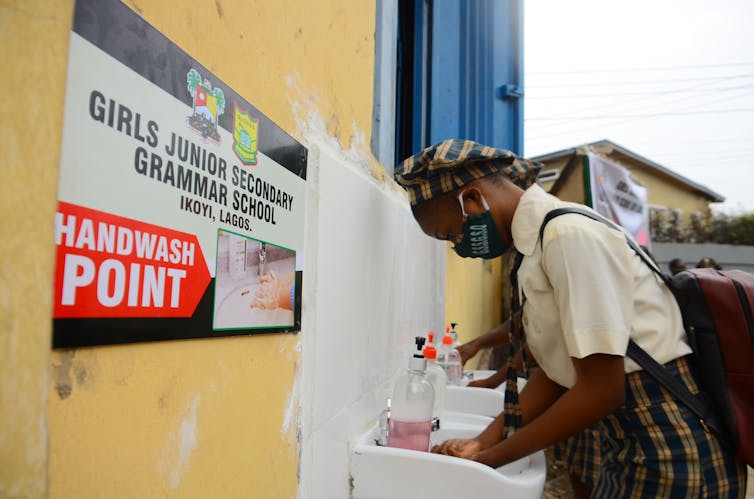
High school students wear face masks as they wash their hands on August 3, the first day of partial resumption of classes in Lagos, Nigeria, since the COVID-19 lockdown. Olukayode Jaiyeola/NurPhoto via Getty Images
Oyebola Oyesola, Cornell University; Christian Happi, Redeemer's University; Dr Adewole A Adekola, University of London; Dr Chinedu Ugwu A, Redeemer's University; Jonathan Heeney, University of Cambridge, and Opeoluwa Adewale-Fasoro, Johns Hopkins Bloomberg School of Public Health

The pace of SARS-CoV-2 transmission has triggered different government responses globally. These have had varying levels of effectiveness and some unintended outcomes.

Nigeria, Africa’s most populous country with many densely populated cities, presents a unique situation for the explosive spread of SARS-CoV-2. Factors include high population density, limited health-care resources and access, and a high poverty index among a range of other socioeconomic factors.

Yet, by early August the number of reported confirmed infections (44,443) and mortality (910) was lower than other countries with dense urban populations and similar socioeconomic challenges.

As we point out in our paper, Insights into the Nigerian CoVID-19 Outbreak, the exact reasons for this are not clear but might include societal, immunological, epidemiological, political and infrastructural factors.

In our paper we set out to describe the ongoing CoVID-19 outbreak and its associated peculiarities. We also identify critical steps that still need to be taken to contain and control the outbreak.

Insights

We found that the CoVID-19 outbreak in Nigeria showed age and sex specific differences. More young people were affected compared to older people. This was different to the global trend.

This age-specific difference was also seen across other African countries. Examples include Ghana and South Africa.

We hypothesise that the age difference in the profile of cases in Nigeria could be due to the lower median age (a more youthful population) in Nigeria and Africa compared to the US and European countries.

Also, there was a sex and gender-based difference in the severity of the outbreak in Nigeria. More males than females have been infected. This is similar to patterns elsewhere in the world.

The reason for this is not clear. Several factors have been suggested. These include the role of sex hormones in the regulation of immune response and the expression of the SARS-CoV-2 receptor.

The expression of the viral receptor - ACE2 - in the Nigerian population should be investigated using various tools such as immunogenetics. This kind of study would help us understand differences in the expression of the receptor across the country, and how this has affected the outcome of the disease.

In immunology, constant exposure to disease causing agents (pathogens) like viruses makes a critical arm of the immune system (innate immune system) more primed to be able to respond quicker and faster to different pathogens. This concept – called trained immunity – is being debated as a possible explanation for the low COVID-19 incidence in Nigeria and Africa due to constant exposure and high burden of different infectious disease.

However, the benefits or detriments of this still have to be fully explored.

Lastly, we argue that public mistrust, misinformation and disinformation could be a major driver of COVID-19 in Nigeria. This mistrust has been an offshoot of the initial widespread dismissal of the reported cases as a “disease of the elite” and an embezzlement ploy for allocated response funds.

This was further reinforced by conspiracy theories emanating from various traditional and online media sources. The consequences of this mistrust were reflected in non-compliance with lockdown rules and social distancing restrictions. This potentially undermined the impact of the government containment response.
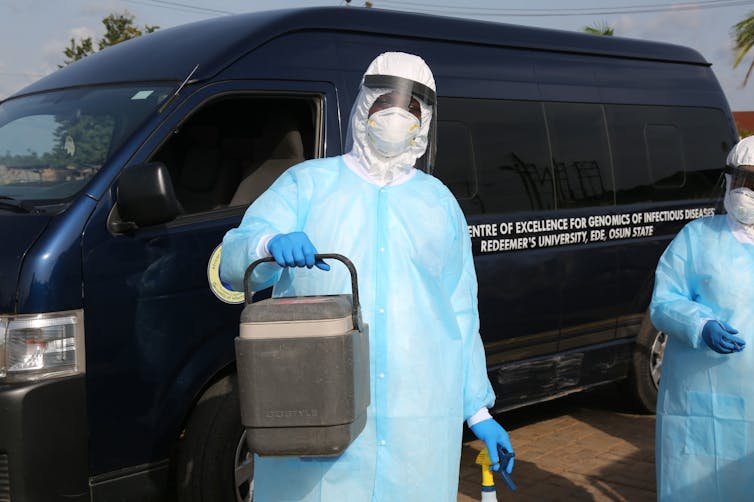
A scientist at the African Center for Genomics of Infectious Disease receives suspected COVID-19 samples for processing. African Center for Genomics of Infectious Disease

Modelling

Our research used the age-stratified SEIR (susceptible-exposed-infected-recovered) model to predict and model the Nigerian COVID-19 outbreak.

This showed that Nigeria is still in the early stages of the outbreak. The expected trajectory depends on the mitigation measures to contain the spread. A surge is expected in the coming months.

It is important to note that the COVID-19 situation in Nigeria is fast evolving. It is therefore difficult to ascertain the efficacy of the mitigation measures.

In addition, this is only a prediction and comes with a level of uncertainty in the parameters and the simplification of the model we used. As with all models, it might not capture the full complexity of the outbreak. But it can help better understand the dynamics of the outbreak. And it can inform government decisions on future interventions.

Consequence and impact

The incidence and spread of COVID-19 has affected Nigerian public health facilities both negatively and positively.

One of the negative consequences includes the impact on other infectious diseases. For example, an evaluation of the Lassa fever epidemiological trend over the past 5 years (2016 – 2020) of the same reporting period (week 1 – 23) also indicates the highest case peak reported in 2020.

This surge might not be absolutely associated with the current COVID-19 outbreak. But the impact of the outbreak would undoubtedly influence resource allocation and the working capacity of the national public health infrastructure.

This suggests that the current pandemic could affect the epidemiology and response to other endemic and integrated diseases. These include cerebrospinal meningitis, malaria, cholera, measles, Lassa fever and Yellow fever.

On a positive note, the COVID-19 outbreak has brought improvements to the health sector. This has included an increase in the implementation of the collaborative One-Health approach. This involves the collaborative participation of stakeholders from the human, animal and environmental health sector.

Examples include the incorporation of veterinarians and environmentalists in the Joint Task Force in response to CoVID-19, and port authorities in the establishment of the Coronavirus preparedness group.

There has also been rapid scale-up and activation of various stand alone laboratories. Lastly, the pandemic has highlighted the enormous potential for genomic surveillance in Nigeria.

But the COVID-19 outbreak, like other infectious disease outbreaks, has exposed the fragile health system in Nigeria. The lack of adequate testing, the poor health infrastructure, sub-optimal investment and funding in the STEM field and inadequate trained health professionals, leave Nigeria on an unknown trajectory.

As we work towards returning to normal, we argue that Nigeria’s leeway out of the COVID-19 outbreak, and other future outbreaks, will require improved diagnostic capacity, effective testing and tracing, and massive investment in research and health infrastructures.The Conversation

Oyebola Oyesola, Recent PhD graduate from Cornell University, Cornell University; Christian Happi, Professor of Molecular Biology and Genomics, Redeemer's University; Dr Adewole A Adekola, Pathobiology and Population Sciences, Royal Veterinary College, University of London, University of London; Dr Chinedu Ugwu A, Research Fellow/Lecturer, Africa Centre of Excellence for Genomics of Infectious Disease (ACEGID), Redeemer's University, Redeemer's University; Jonathan Heeney, Professor of Comparative Pathology, Cambridge University, University of Cambridge, and Opeoluwa Adewale-Fasoro, Researcher, Molecular Microbiology and Immunology department, Johns Hopkins Bloomberg School of Public Health, Johns Hopkins Bloomberg School of Public Health

This article is republished from The Conversation under a Creative Commons license. Read the original article.

Share:

What is ammonium nitrate (NH4NO3), the chemical that exploded in Beirut?

Wael Hamzeh/EPA

The Lebanese capital Beirut was rocked on Tuesday evening local time by an explosion that has killed at least 78 people and injured thousands more.

Share:

How we learnt more about dangerous pollutants in Lagos lagoon

How we learnt more about dangerous pollutants in Lagos lagoon

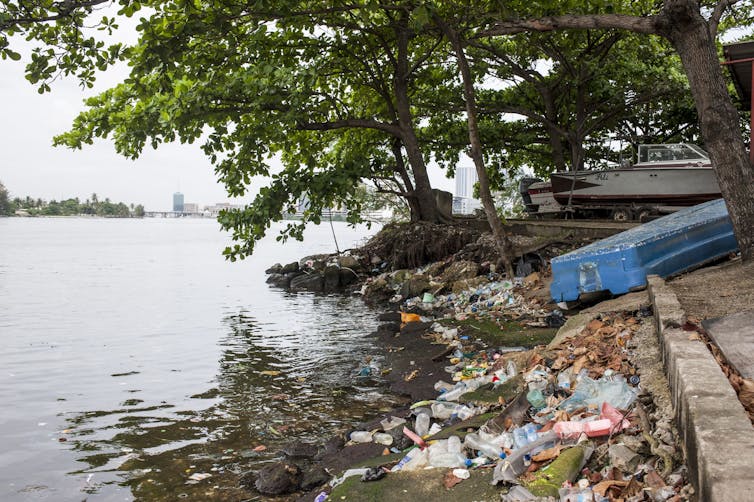
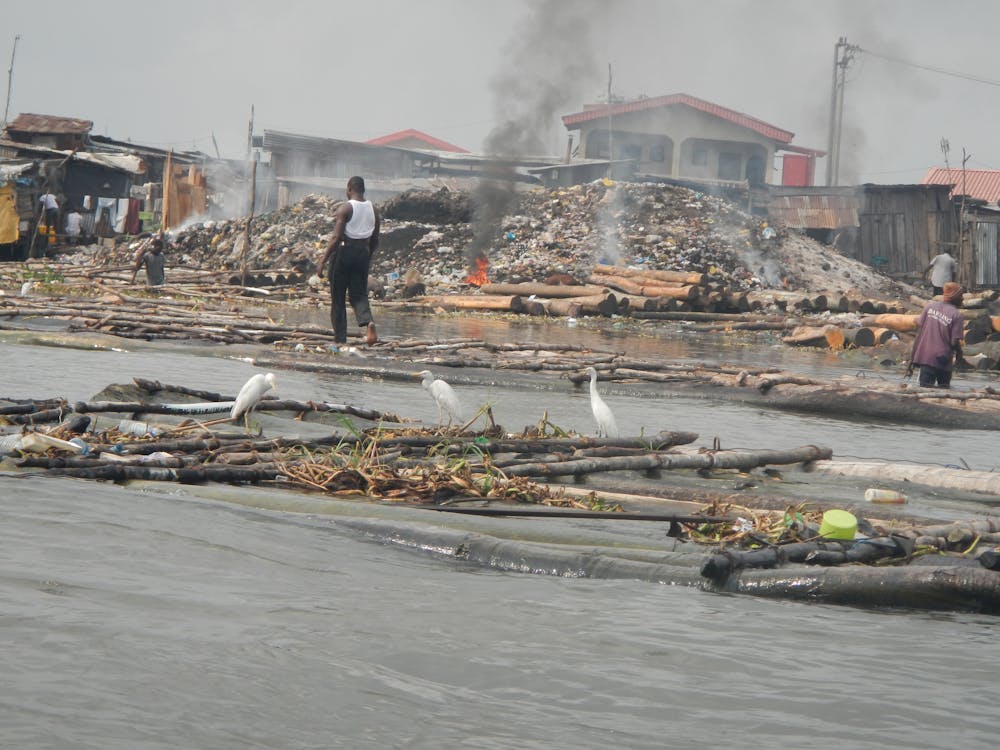
Plastic bottles, containers and other waste washed up from the Lagos lagoon at one of the waterfront jetties Stefan Harris/AFP via Getty Images
Aina Adeogun, University of Ibadan

Lagos lagoon is the largest of four lagoon systems off the Gulf of Guinea. Several rivers and waterways empty into it, and it plays an important role in the West African coastal ecosystem as well as the Nigerian economy.

Several aquatic organisms in the lagoon are commercially important species, providing food and income for surrounding communities and beyond. The fish caught here represent more than half of Nigeria’s fisheries production of nearly 800,000 metric tonnes. This unique brackish water environment also plays significant roles in ecosystem stability and as a breeding ground for aquatic species.

Unfortunately, the lagoon receives enormous amounts of largely untreated industrial and other wastes. Lagos State accounts for most of the country’s industries and is home to an estimated 20 million people.

The Ogun, Osun, Ona and Yewa rivers empty large volumes of water from inland and coastal cities. This water is generally polluted by industrial, domestic and agricultural activities. The lagoon also receives a large quantity of pollutants from manufacturing and municipal activities in the greater Lagos metropolis. They include organic and inorganic pollutants which produce potential health risks for fish, shrimps and crabs – and people who eat them.

We conducted a study to evaluate the effects of these pollutants on fish food and the environmental health of the Lagos lagoon. We aimed to provide environmental health management authorities with scientific data for effective protection of marine ecosystems and human health. We used a novel method for analysing sediment samples, to understand how the different pollutants distribute within the lagoon ecosystem and affect the organisms that live there.

We found that the complex combination of pollutants in Lagos lagoon interferes with fish and mammal biology – especially their endocrine systems – and is potentially harmful to humans.

Makoko hotspot with associated sawmill industrial waste. Courtesy Author

How we tested the effect of pollutants

The growth and industrialisation of big cities such as Lagos contribute many pollutants to water and land ecosystems. A number of pollution hotspots have also been identified in the area, including the city of Ikorodu, the slum area of Makoko and Idumota market. Plastic products, used tyres and car parts are some of the waste items that end up in the Lagos lagoon, through inappropriate waste disposal methods, dumping, and industrial and agricultural activities.

The end-station for these pollutants is the bottom of the lagoon. The sediments store pollutants and release them during heavy rainfall, winds and underwater turbulence. Bottom-dwelling organisms, particularly invertebrates, also stir up sediments during feeding and interactions between predators and prey, returning contaminants to the water.

In our study we tested three of the ways in which contaminants are released into the water in nature. This gave us a better understanding of how contaminants affect organisms in water.

The first method was elutriation, a process which simulates the natural process of mixing bottom soil and water, for example when boats disturb the water. In this process, pollutants are re-suspended in the water.

The second was polar extraction, which isolates pollutants that can dissolve in water and remain there in high concentrations.

The third was non-polar extraction. This method was used to evaluate the effects of pollutants that are transferred from sediment to organisms when they feed on particles of the bottom soil. Snails, earthworms, crabs and some fish can take in pollutants this way.

The different extraction methods produce results that are comparable to what happens in the natural environment. They allowed us to learn more about the complex interactions between water and bottom soil pollutants. We could also learn about the effects of pollutants on aquatic organisms, including the threat to their growth and reproduction.

We then exposed fish cells and rat cells to the pollutants extracted from the lagoon bottom soil.

Using animal cells (fish and rat) is a new way to avoid using live animals for research. It resolves the ethical dilemma associated with animal use in research and provides a deeper understanding of several biological processes. The molecular analysis of these cells can give an early warning of damage to animal and environmental health. Steps can then be taken to reduce harm.

What we found

Our assessment of contaminant loads at various parts of Lagos lagoon revealed a wide range of priority pollutants. These are pollutants with significant toxic potential for wildlife and humans. They include heavy metals such as mercury and cadmium, as well as organic compounds PCBs, phenols, PAHs and organotins. Some of these contaminants are known endocrine disrupting chemicals. They also induce enzyme systems that may alter the pollutant into a less harmful chemical and eliminate it from the body.

We reported that they produce hormonal imbalances with disruptive effects on the endocrine and chemical transformation systems of fish, crabs, shrimps and crocodiles. Such effects may lead to changes in reproductive organ development and result in gender confusion or the intersex condition. Documented effects on wildlife populations include reductions in fish species.

Our findings showed that exposing cells to low concentrations of the pollutants extracted from Lagos lagoon sediments not only killed the cells, but also activated the enzymes that metabolise these pollutants. Ultimately, this reduces the ability of the cell to break down pollutants properly, with further consequences for growth and reproduction.

Pollutants from industrial and domestic sources in the Lagos lagoon represent a cocktail of environmental contaminants. They are capable of interfering with the growth and reproduction of fish and mammals that depend on the stability of the lagoon ecosystem.

These findings imply that there are potential risks for harmful effects on human health. The pollutants are potentially transferred to humans from aquatic food resources. They become more concentrated along the food chain. Given that the hormone systems of vertebrates are similar, pollutants that affect fish will potentially affect humans in similar or comparable ways.

This indicates possible negative health consequences for people who depend on the lagoon as a food source.

The heavy pollutant load may also be contributing to the observed decrease in fish catches at the lagoon in recent times. This effect may arise from the inability of enough fish eggs and young fish to develop into adults. Or it could be from damage to food and nursery habitats for young fish.

What needs to happen

Until now, a lack of scientific information about pollution in the lagoon has made it difficult for regulatory bodies to develop and enforce water and food safety regulations. The information provided by our studies could contribute to developing protocols for treating industrial effluents. This is also in line with the United Nations Sustainable Development Goal 14, on the protection of life under water.

We recommend that regulatory agencies develop and adopt a Nigerian version of REACh (Registration, Evaluation, Authorisation and Restriction of Chemicals), the European Union Regulation 1907/2006/EC regarding chemicals. They should also do more to enforce the legal protection of natural habitats.

Government and industrial facilities should work together to find ways to reduce pollution before effluents reach the lagoon.

And finally, scientists need to routinely monitor the environment to see how species are responding.The Conversation

Aina Adeogun, Professor of Aquatic Toxicology, University of Ibadan

This article is republished from The Conversation under a Creative Commons license. Read the original article.
Share:

SHOCKING: Choir Member Infects 52 People With COVID-19 During Choir Practice


A COVID-19 super-spreader unknowingly infected 52 people with coronavirus at choir practice in Mount Vernon, Washington, in early March, leading to the deaths of two people, a new Centers for Disease Control and Prevention (CDC) report finds.
Share:

Popular Nigerian Man in New York, Jonathan Adewumi dies of Coronavirus @ 57


Proud of his Nigerian heritage, he brought Africa to New York and, at his Brooklyn restaurant, united a community.
Share:

What Do We Know About Madagascar’s COVID-19 Cure?


Let me begin by saying ‘there is no such thing as miracle cure’.
Madagascar's Covid-Organics Tea
Share:

Finally End Of Covid-19 And Life Going Back To Normal As Breakthrough of Vaccine Announced

Finally End Of Covid-19 And Life Going Back To Normal As Breakthrough of Vaccine Announced

May 6, 2020 7:51 PM
Covid-19 will be the first major case of rapid vaccine development having to surpass some time due to development in technology as compared to earlier days when vaccine development used to take so much time of upto years but now it has come down to mere months for the development. There are currently more than 100 research projects around the world working on the same thing, with 7 currently in clinical trials.

For a vaccine to be tested and approved it takes time and lots of animal trial before human trials begin in which vaccine gives someone immunity so that they don't get sick when they are exposed to the pathogens though you have to immunise enough people about 65% of the population so as to make sure no one get sick.

Researchers say that the SARS-CoV-2 pathogen is similar to coronaviruses which we have encountered before, including the SARS virus that struck in 2002. The first US clinical trials for a potential vaccine have begun in Seattle. Biotech company Moderna, has taken a piece of the genetic code for the pathogen's S protein, the part that's present in other coronaviruses, like SARS -- and fused it with fatty nanoparticles which can be injected into the body.
The race is on among researchers to develop coronavirus vaccines as the deadly disease shows no signs of stopping.
Anthony Fauci, the director of the National Institute of Allergy and Infectious Diseases, said that it would take at least a year and a half to have a vaccine for coronavirus.

But usually, a vaccine takes about five to 15 years to come to the market, according to Jon Andrus, an adjunct professor of global vaccinology and vaccine policy at the Milken Institute of Public Health at George Washington University.
According to the sources, a team of Italian scientists made an announcement regarding the successful development of a vaccine which has capacity to contain coronavirus and any of it’s mutations.
This is the month of May but the anti-virus has not been found to battle the novel virus but latest reports claim that a team of UK specialists are in the laboratories trying to come out with something substantial. 

The team claims that they are working on a vaccine, they also add that so far, it has produced positive results. This must be promising. 
The experts claim that the vaccine is nearly perfect since it has a 99.8% positive response to the infection. If the same results prevail, it will be out to help in weeks. 
Serology tests have been conducted on the Covid-19 patients and they are responding to gain immunity with the vaccine introduced in their system
Share:

COVID-19 UPDATE ON KANO CASES; the reasons to the massive death and spread of the pandemic.


There're at least four major reasons for the recent mass deaths and slow COVID-19 response in Kano:
Share:

AbdulRazaq congratulates Kwara nominees to FCC


Gov. AbdulRahman AbdulRazaq of Kwara has congratulated Hajia Fareedah Dankaka
Share:

First effective coronavirus treatment found and set to be approved for patients

First effective coronavirus treatment found and set to be approved for patients

metro.co.uk
Apr 29, 2020 7:44 PM
Photo of Dr Anthony Fauci next to photo of Remdesivir vial
Dr Anthony Fauci has announced Remdesivir as an effective coronavirus treatment, with the drug now approved for emergency use by the US Food and Drug Administration (Pictures: AP)
White House immunologist Dr Anthony Fauci has announced the discovery of the first effective coronavirus treatment, which is set to be approved for use later today. Speaking at the White House Wednesday, Dr Fauci said worldwide tests on anti-viral drug Remdesivir showed it had a ‘clear-cut, significant, positive effect in diminishing the time to recovery’ for Covid-19 patients who were treated with it.
He continued: ‘This is really quite important for a number of reasons, it’s highly significant.’ Dr Fauci said the average recovery time in patients given Remdesivir was 11 days, compared to 15 days for Covid-19 patients assigned the placebo, equivalent to a 31% improvement.
He added: ‘What it has proven is that a drug can block this virus. Looking forward, we think this is very optimistic. The mortality rate trended towards being better – 8% (of people given Remdesivir later died) versus 11% (who died after being given the placebo)’ Dr Fauci said Remdesivir’s early success was announced for ethical reasons, to give patients currently suffering from coronavirus a better chance of being treated with a drug now known to be effective.
The US Food and Drug Administration (FDA) will now announce Remdesivir as an emergency treatment for Covid-19 sufferers in the United States as early as later today.
The immunologist referenced the battle to find an effective treatment for HIV during the 1980s – which he as a key part of. He added that Remdesivir could potentially be combined with other drugs to yield even better results, just like a combination of medicines have been used to successfully treat HIV.
Dr Fauci’s announcement marks the first big breakthrough in the race to find an effective treatment for coronavirus. He spoke while flanked by a smiling Dr Deborah Birx – the White House coronavirus task force’s coordinator, and President Trump.
Dr. Anthony Fauci (L), director of the National Institute of Allergy and Infectious Diseases speaks next to Response coordinator for White House Coronavirus Task Force Deborah Birx, during a meeting with US President Donald Trump and Louisiana Governor John Bel Edwards(C) D-LA in the Oval Office of the White House in Washington, DC on April 29, 2020. (Photo by MANDEL NGAN / AFP) (Photo by MANDEL NGAN/AFP via Getty Images)
Dr Fauci made the announcement at the White House flanked by coronavirus coordinator Dr Deborah Birx, President Trump and Governor of Louisiana John Bel Edwards (Picture: AP)
Dr Fauci has repeatedly urged caution after President Trump hailed Remdesivir and anti-malaria treatment hydroxychloroquine as potentially powerful Covid-19 treatments, with Wednesday’s announcement his most optimistic announcement since the outbreak began.
Dr Fauci explained that the trial had been conducted by the US National Institute of Allergies and Infectious Diseases, of which he is director. It sponsored the trial, which began on February 21 and involved some patients being given a placebo – dummy treatment – while others were given Remdesivir itself. He described the trial as ‘highly-powered,’ with 1,090 patients given either the drug or the placebo across the world, including in Germany, Greece, Denmark and the UK.
Dr Fauci said independent auditors judged the success of Remdesivir on how quickly it helped coronavirus patients recover. He stressed that Remdesivir is a treatment for people who have already been diagnosed with Covid-19, rather than a cure for the disease, or a preventative to stop it from developing in the first place. Dr Fauci said the race to develop a vaccine to prevent Covid-19 continues, with teams across the world attempting to formulate an effective shot.
White House coronavirus response coordinator Dr. Deborah Birx, right, and Director of the National Institute of Allergy and Infectious Diseases Dr. Anthony Fauci attend a meeting about the coronavirus with Louisiana Gov. John Bel Edwards and President Donald Trump in the Oval Office of the White House, Wednesday, April 29, 2020, in Washington. (AP Photo/Evan Vucci)
White House immunologist Dr Anthony Fauci, pictured seated next to Dr Deborah Birx, announced on Wedneday that anti-viral drug Remdesivir had proven an effective treatment of coronavirus (Picture: AP)
Remdesivir was developed by drug company Gilead as an experimental anti-viral treatment it was hoped would treat Ebola. It failed to do so, but now appears to be the first drug that can help Covid-19 patients recover from the new virus
Share:

Good News: After 4 IVF attempts, 68-year-old Nigerian woman gives birth to twins


After being married for 46 years and going through three previous IVF procedures, Margaret Adenuga finally gives birth to twins, a boy, and a girl at the age of 68.
Margaret Adenuga and her husband Noah with their twins at the maternity ward of the Lagos University Teaching Hospital.
Source: LUTH
Share:

Hilarious!. See what a wife did to her husband and what she got after.......

Relax and read through.......
Some are wicked sha....
Good afternoon, my husband has refused to
Share:

WHO Gives Six Conditions Before Lifting Covid-19 Lockdown

WHO Gives Six Conditions Before Lifting Covid-19 Lockdown

95
Countries that want to lift coronavirus restrictions must meet a row of conditions to prevent another surge of infections, Director-General of the World Health Organisation, Tedros Adhanom Ghebreyesus, said on Thursday.
In his weekly address to Geneva-based Diplomats, Tedros said that easing social and economic curbs “must be done extremely carefully.”
“If done too quickly, we risk a resurgence that could be even worse than our present situation,” he warned.
First, governments must ensure that the spread of the novel coronavirus is under control.
According to new WHO guidelines, this means that health authorities must know the origin of every single case and cluster of infections.
Also, National health systems (like the Nigeria Centre for Disease Control) must be able to find, test, isolate and treat every new case, and all recent social contacts of every infected person must be tracked down.
In addition, Tedros stressed that countries that want to ease their curbs must minimise infection risks in hot spot settings such as hospitals and nursing homes.
As a fourth condition, Tedros said that preventive measures must be in place in workplaces, schools and other essential locations.
This includes physical distancing, hygiene etiquette and, possibly, temperature measurements, according to the new WHO guidelines.
Another condition is that countries must also manage the risk of importing new cases from abroad, by detecting infected travellers, and by quarantining those who arrive from hot spot countries.
Lastly, Tedros said it is important that “communities are fully educated, engaged and empowered to adjust to the ‘new norm’” of behaving in ways that prevent new infections
Share:

The corn of Africa is better than the wheat of Argentina

Vladimir Putin has stated that Africa will never be independent because they believe in Europeans, Americans and Chinese more than themselves.
Putin show his concerns on Africa how they didn’t believe in themselves.
According to him,
“Africa will never be independent, Africans believe in Europeans, Americans, and Chinese more than themselves.
“They don’t trust themselves at all, African technocrats/Engineers aren’t given the platform to practice what they studied instead they hire Chinese to construct roads for themselves.
“A white man will commit a crime in Africa but no action will be taken because the African authorities view us as Demigods, far from the truth.
“A black man can be abducted in Europe get harassed and even be killed but no African authority can even question.
“Africans present themselves as weak people with no hope, especially when dealing with Europeans and Americans.
“They are their own enemies. They hate each other and this gives their colonial masters the opportunity to continue exploring their resources.
“^As far as I know, Africa is more of God’s chosen continent, its a blessed continent and its time for Africans to Realise they are in a place where Americans, Europeans and Chinese are jealous of and wish it should be them there.
“You can’t compare African weather with any other weather.
“African soil can feed the whole of Europe, America, and Asia but their problem is just one, “THEIR LEADERS”.
If you sit on gold, oil, uranium and your people don’t have food to eat, You are not Human – Trump call out to Africa leaders
“As far as I am concern their best president ever was Gaddafi“
Share:

pub-9867552784761173

pub-9867552784761173 ca-pub-9867552784761173

Blog Archive

Powered by Blogger.

Labels

News (21) Health and Fitness (18) Education (15) Sport (15) Facts (14) Entertainment (11) COVID-19 (5) Movies (4) Politics (4) Technology (4) Business (3) Relationship (3) Architecture and Lifestyle (2) Horoscope (2) Environment (1) Natural History (1) Public Health (1)

Search This Blog